
Few DIY weed remedies get passed around like the salt and vinegar spray. The recipe is everywhere: a gallon of vinegar, a cup of salt, a squirt of dish soap, and supposedly the weeds in your driveway cracks and garden beds just give up. There is a kernel of truth in it — but there is also a catch that can damage your yard for years. Here is Mr. Lee's honest breakdown of what salt and vinegar actually do to weeds, where the mix works, and where you should never spray it.
What Each Ingredient Actually Does
- Vinegar (acetic acid) — Household vinegar is about 5% acetic acid. It burns the foliage it touches by breaking down cell membranes, so leaves yellow and shrivel within hours on a hot, sunny day. It is a contact burn-down, not a systemic killer: it does not travel down into the roots. Horticultural vinegar (20% acetic acid) burns harder, but it can also burn skin and eyes and damage concrete and stone — handle it like the acid it is.
- Salt (sodium chloride) — Salt pulls water out of plant cells and, more importantly, stays in the soil. Repeated use sterilizes the ground: nothing grows there, including the plants you want. Salt also leaches sideways with rain, and Seattle gets plenty of rain to move it into nearby beds and lawns.
- Dish soap — A few drops act as a surfactant. It strips the waxy coating on leaves so the vinegar sticks and penetrates instead of beading off. It is the one ingredient with no real downside at recipe strength.
Where It Works
Salt and vinegar works best as a spot treatment on young, shallow-rooted annual weeds growing where you never want anything to grow again:
- Weeds in driveway and sidewalk cracks
- Graveled areas and paths far from planting beds
- Small annual weeds (chickweed, young crabgrass) caught early
Apply on a dry, sunny, calm day — heat and sun do half the work. Soak the foliage thoroughly, and expect to reapply after rain or when new seedlings appear. The tops will brown fast; that part is real.
Where It Fails — and Where It Backfires
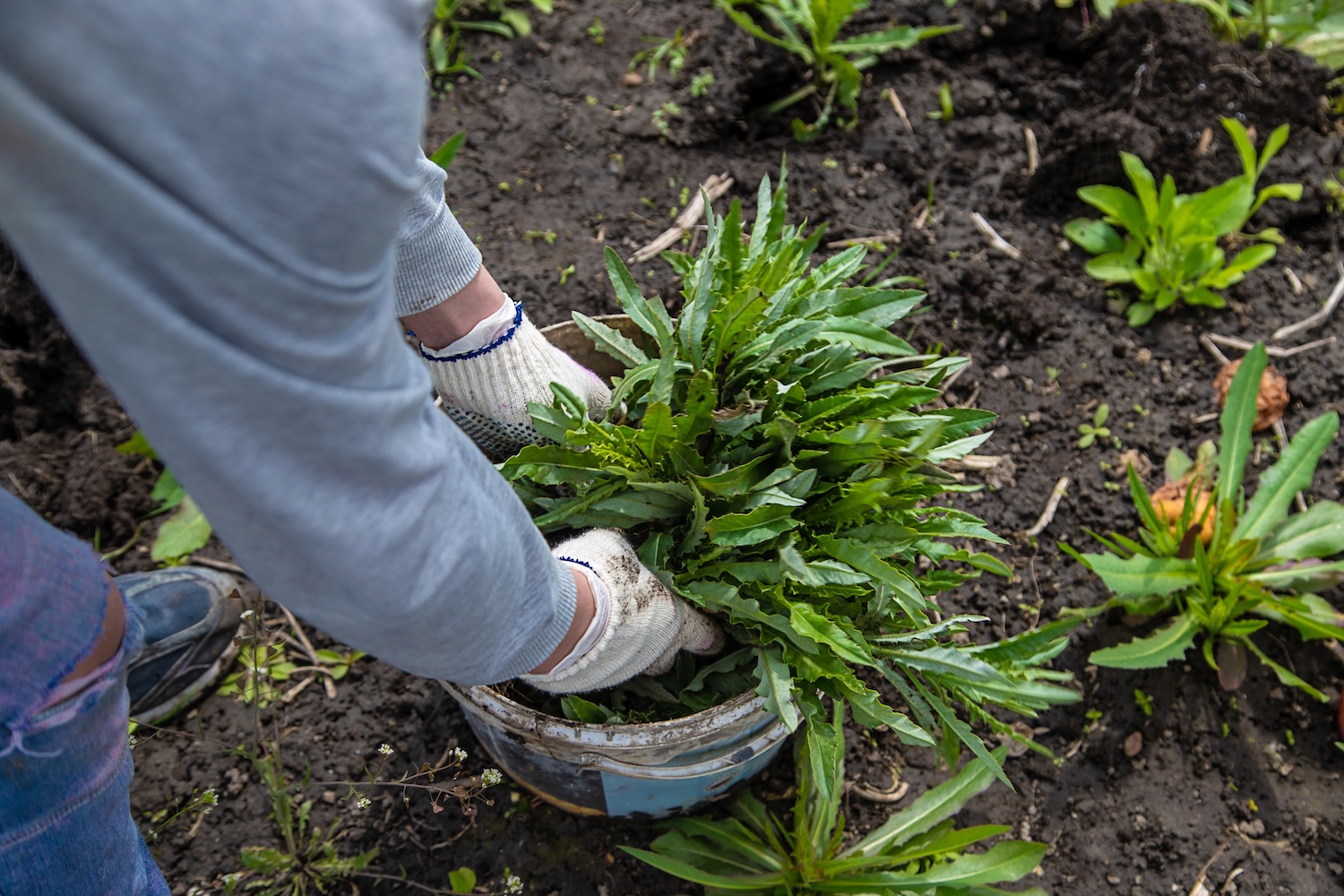
- Perennial weeds laugh at it. Dandelions, creeping buttercup, bindweed, and blackberry regrow from roots, crowns, and runners. You burn the leaves, the root sends up new growth, and you are spraying again in two weeks.
- Salt poisons soil. In beds, borders, and lawns, salt buildup can keep anything from growing for seasons. It is the main reason we tell homeowners to keep this mix away from anywhere they value. Seattle's winter rains will also carry salt into the root zones of shrubs and trees you never sprayed.
- It does not discriminate. Overspray and drift burn lawn grass and ornamentals just as happily as weeds.
- Surfaces suffer. Vinegar can etch concrete and natural stone, and salt accelerates damage to pavers and masonry.
Safer Ways to Get the Same Job Done
- Boiling water — A kettle of boiling water on crack weeds cooks them in place with zero soil residue. Slow, but perfect for small areas.
- Hand pulling after rain — Seattle soil loosens up beautifully after a soaking rain. Pull perennials when the ground is wet and you will get far more root.
- Mulch, 3–4 inches deep — In beds, a proper mulch layer starves weed seedlings of light and stops most of them before they start.
- Flame weeding — A propane torch pass wilts crack weeds without chemicals. Keep it away from bark, dry mulch, and cedar fences.
- Targeted herbicide, used sparingly — For deep-rooted perennials, a paint-on or spot-spray selective product often does in one pass what vinegar cannot do in ten, with less total chemical in your soil than repeated salt.
Mr. Lee's Verdict
Keep the vinegar, skip the salt. A vinegar-and-soap spray is a reasonable tool for crack weeds and gravel areas where sterile ground is acceptable. But in lawns and planting beds — anywhere you want things to grow later — salt is a long-term problem disguised as a quick fix, and neither ingredient will finish off the deep-rooted weeds that cause Seattle homeowners the most trouble. Those need to come out by the root, or be handled with a targeted treatment.
If the weeds have moved past the spot-spray stage, our yard cleanup service clears beds, borders, and overgrown corners — roots and all — across the Seattle area.