
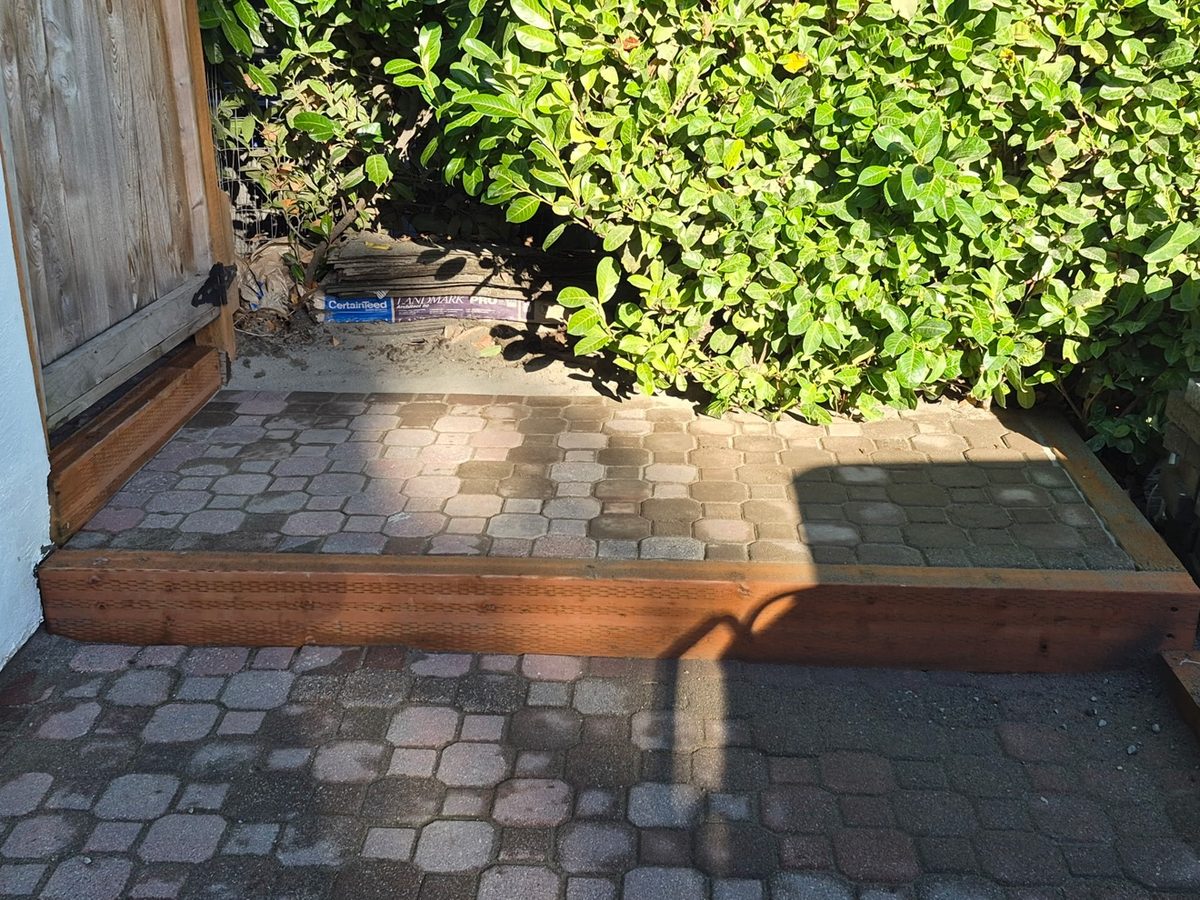
Some jobs aren't about adding something new. They're about fixing the spot you walk across every day.
At this home in Seattle's Seward Park neighborhood, the steps by the side gate had seen better days. The old timbers were weathered and gray, and the pavers around them had sunk and shifted out of level — the kind of slow settling that turns a simple step into something you have to watch your footing on.
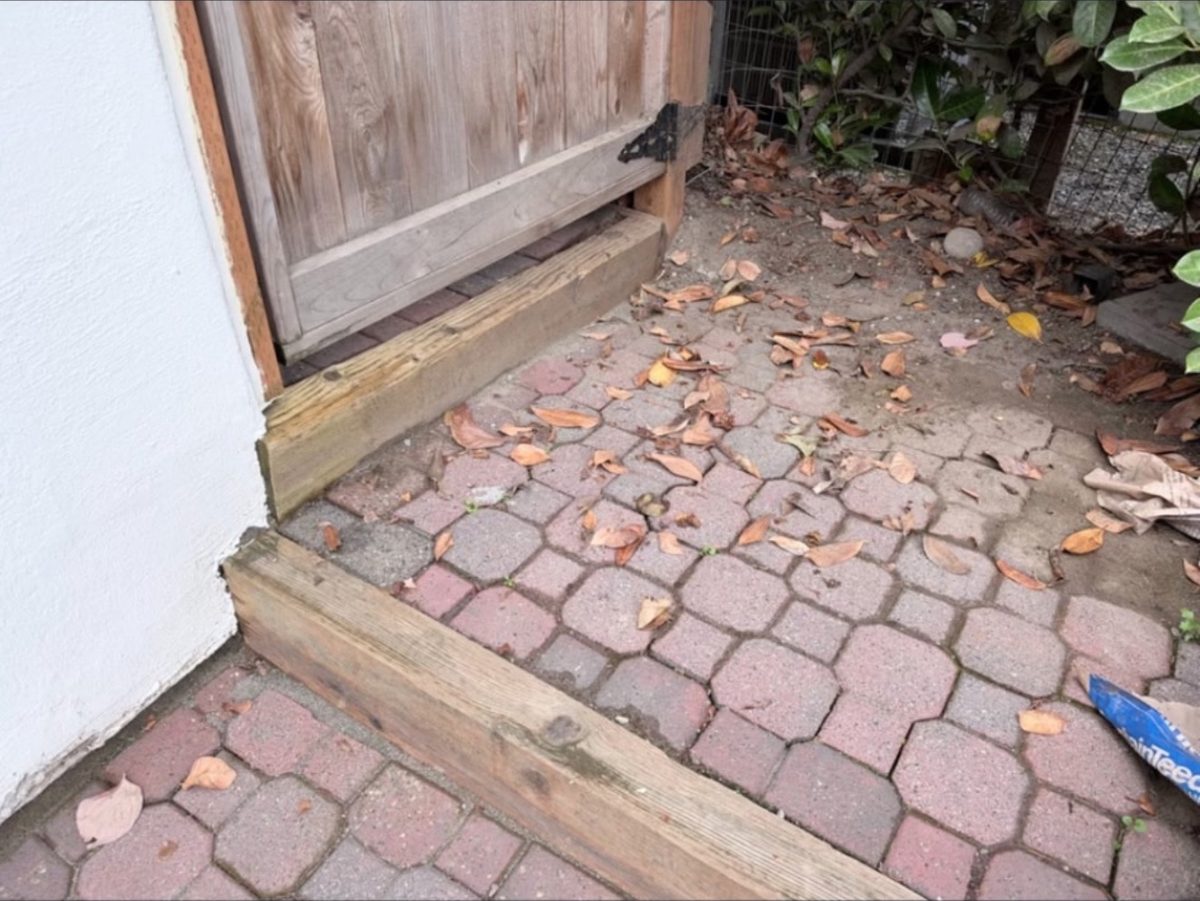
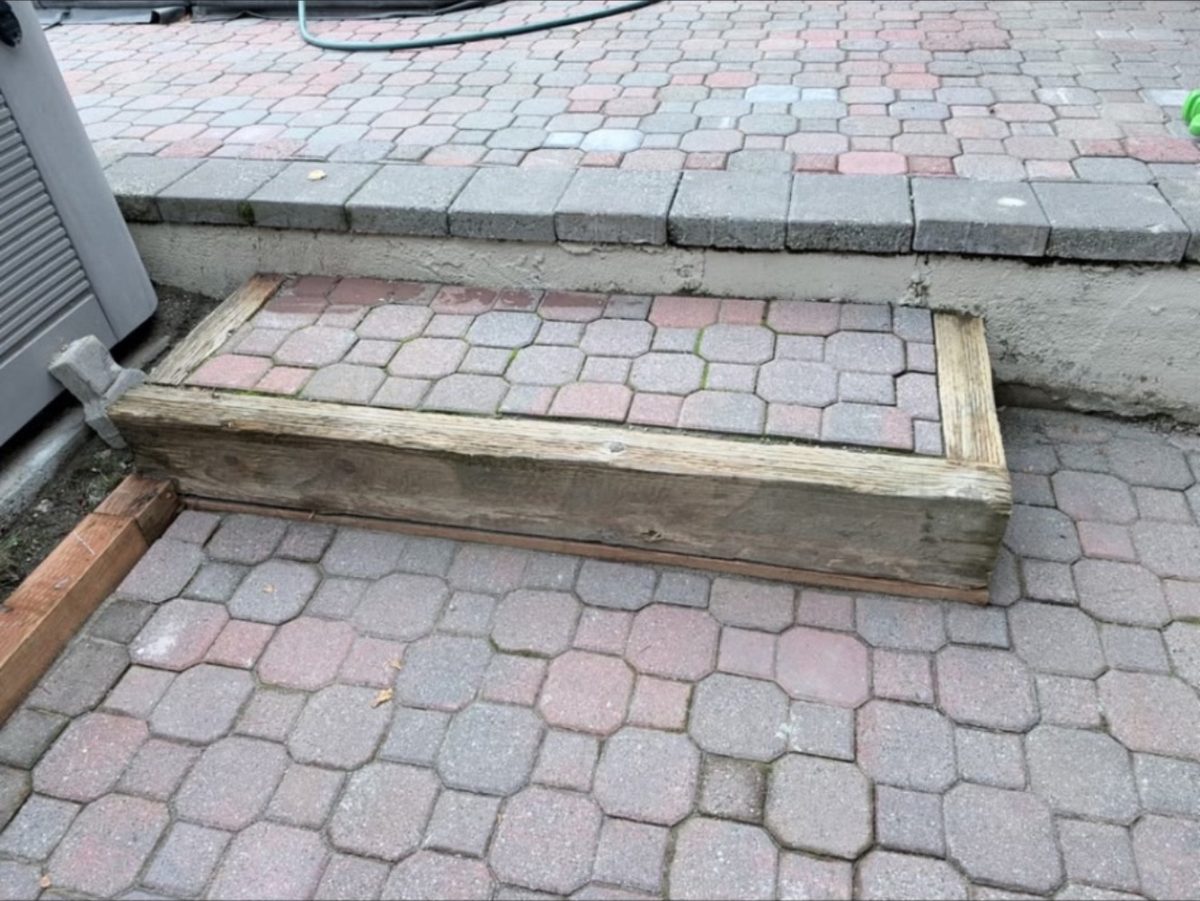
New steps, built to stay put
We replaced the steps with 4x8 pressure-treated wood — heavy timber that holds up to ground contact and Seattle weather — and re-leveled them so each step sits flat and even.
Then we anchored them with steel rebar driven into the ground. That's the part you don't see in the finished photos, and it's the part that matters: the rebar pins the timbers in place so the steps can't creep, shift, or rock over time.
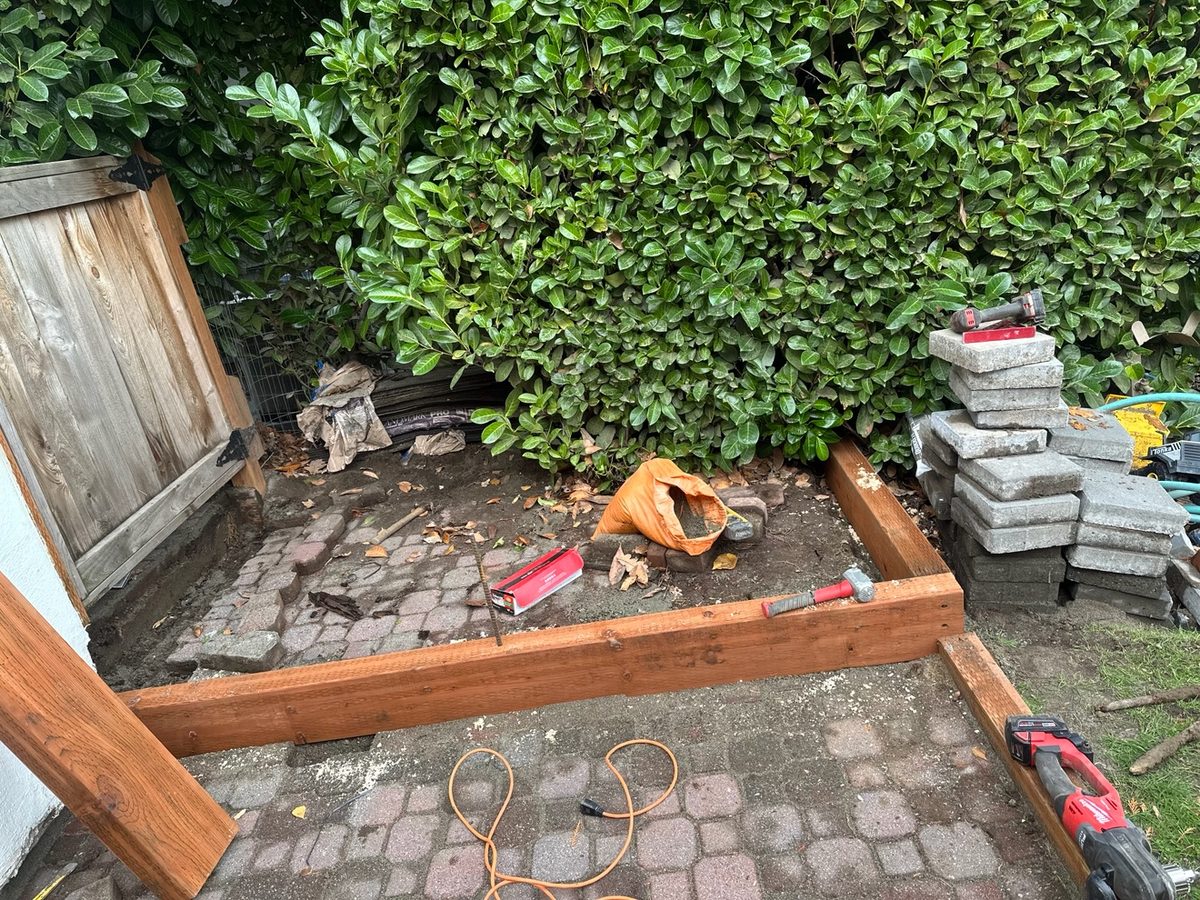
The pavers got a proper fix, not a patch
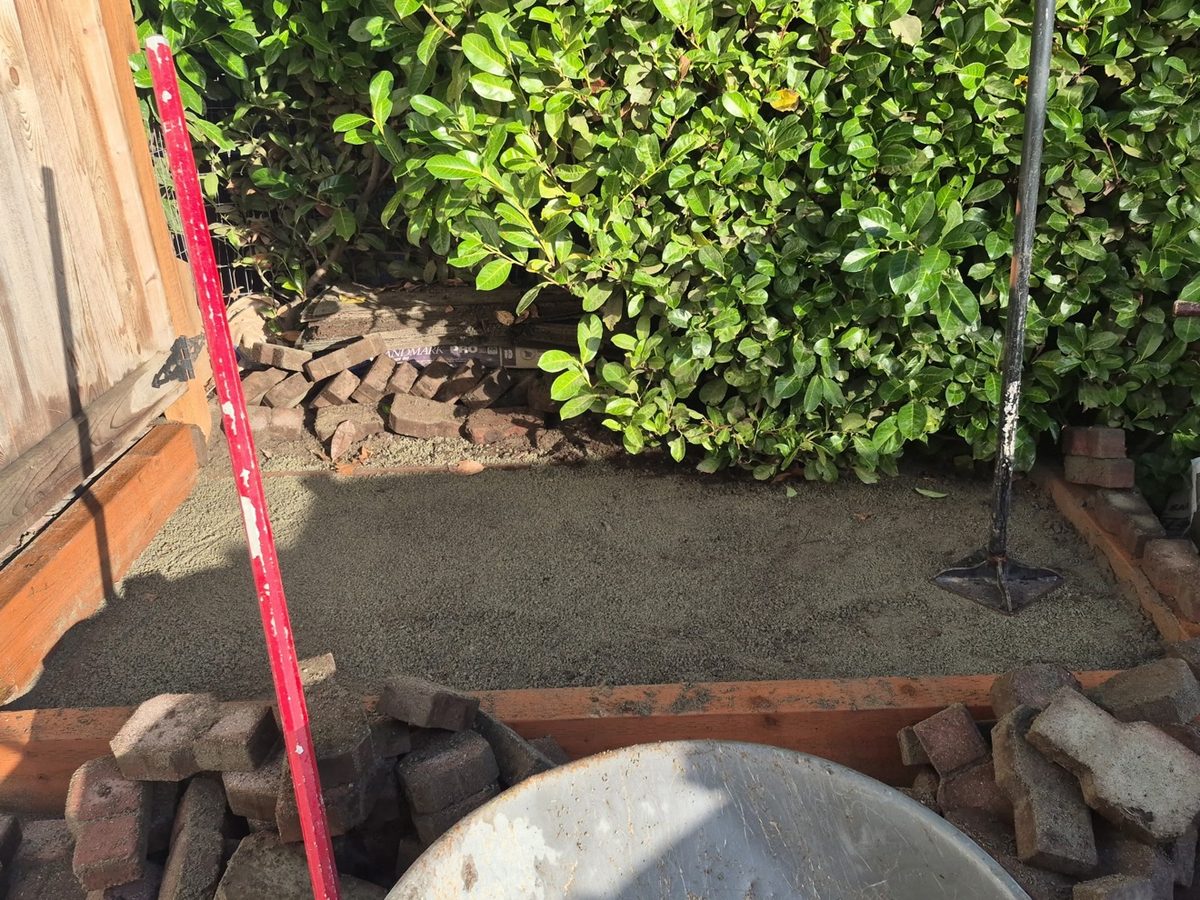
Pavers don't sink on their own — they sink because the base under them has failed. Lifting a few pavers and shimming them never lasts. So we did it the way that does:
- Removed the pavers and set them aside to reuse
- Reset the base underneath
- Added 5/8-minus crushed rock and compacted it
- Screeded the base flat and smooth
- Re-laid the pavers and leveled them
5/8-minus is crushed rock with the fine material still in it, so it packs down tight and locks together when it's compacted. Screeding gives the pavers a flat bed to sit on, so the finished surface comes out even instead of wavy.
The result
A solid new step that doesn't move under your foot, anchored with rebar, and a paver landing that's flat and level again — on a rebuilt base, so it stays that way.
Paver repair in Seattle: when re-leveling is the right fix
Most paver problems — sunken pavers, uneven joints, a wavy walkway or a patio that puddles — are base problems, not paver problems. Paver leveling and repair means lifting the pavers, rebuilding and compacting the base, and re-laying them flat, reusing the pavers you already have. It's the right fix when the pavers themselves are still sound but the ground under them has settled, washed out, or was never compacted properly in the first place.
If your paver patio, walkway, or steps have sunk, shifted, or gone wavy, the fix is usually underneath, not on top. See our paver patio work, or tell us what's going on with yours — we serve Seward Park and neighborhoods across Seattle, and we'll take a look.