
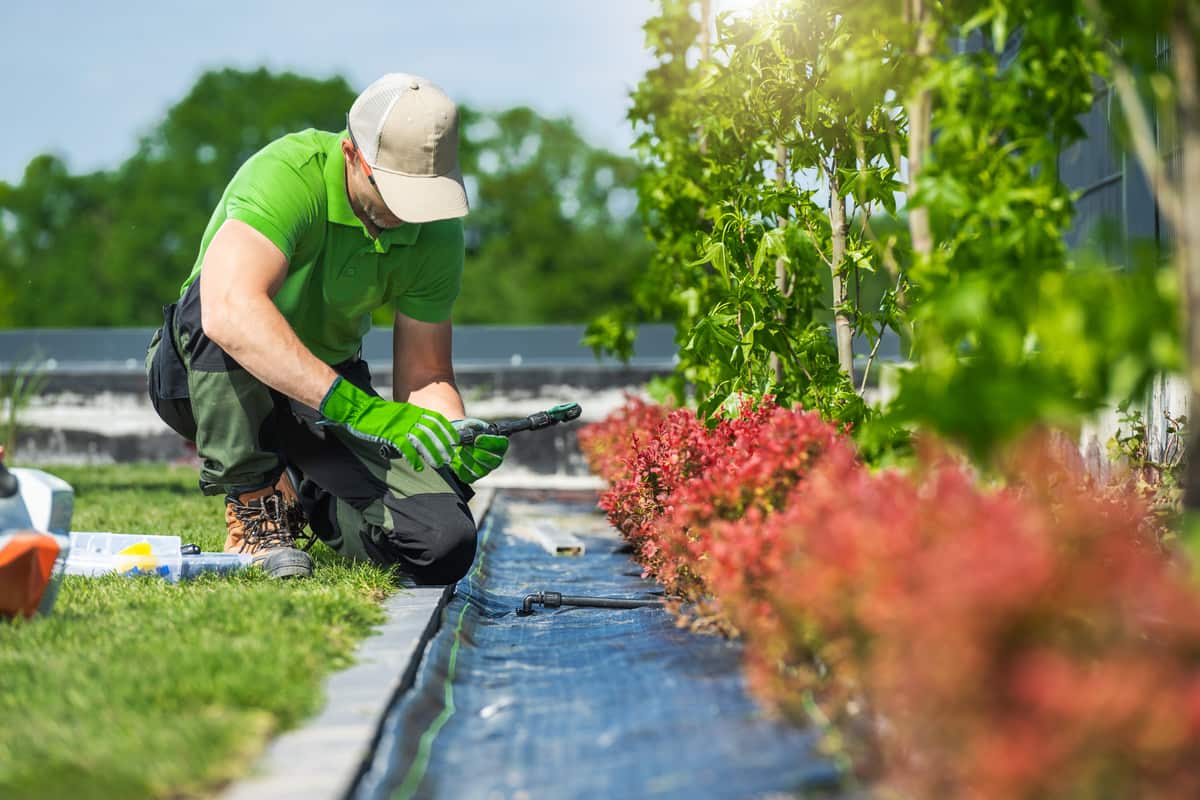
Drip irrigation is the most efficient way to water shrubs and trees in Seattle—but “efficient” only works if the system runs long enough. Drip emitters deliver water slowly, in gallons per hour instead of gallons per minute, so the question isn’t really how often you water. It’s how long each run lasts, and how deep the water gets.
Here’s how we size it for the shrubs and trees we plant and maintain around Seattle.
The Short Answer
For most established shrubs on drip, aim for a deep soak once or twice a week during the dry stretch (roughly July through early September), not a short sprinkle every day:
- Small shrubs (1–3 ft): one or two 1-gallon-per-hour emitters, run 1–2 hours per session
- Medium shrubs (3–5 ft): two 1-GPH emitters, run 2–3 hours per session
- Large shrubs and small trees: two to four emitters (or a short emitter ring), run 3–4 hours per session
- Trees: separate zone with bubblers or high-flow emitters—see below
The goal is moisture 8–12 inches down for shrubs and 12–18 inches down for trees. A $5 soil probe (or a long screwdriver) tells you more than any schedule: if it slides in easily to depth a day after watering, you’re in good shape.
New Plants Need More—at First
Freshly planted shrubs and trees haven’t grown roots into the surrounding soil yet, so for the first season they need shorter, more frequent runs—every 2–3 days in summer heat—while the root ball settles in. After the first full growing season, shift to the deep-and-infrequent schedule above. More plant losses come from this transition being skipped (in both directions) than from any other watering mistake we see.
Trees Are Their Own Zone
Trees outgrow shrub emitters quickly. A young tree does fine on two 2-GPH emitters; as the canopy widens, move the emitters outward toward the drip line and add more—roots spread with the canopy, not the trunk. Mature trees are better served by bubblers or a dedicated tree ring on their own valve, run long and slow so water soaks deep instead of running off Seattle’s clay.
Adjust for Seattle’s Seasons
- Spring: Rain does most of the work. Run the system only during dry spells of a week or more, and use the time to check for clogged or chewed emitters.
- Summer: Our real dry season. Run the full schedule above, early in the morning so less is lost to evaporation.
- Fall: Cut run times in half as rains return; new plantings still need help until the ground stays wet.
- Winter: Shut down and drain the system before hard freezes. Established shrubs and trees need nothing until spring.
Signs You’re Getting It Wrong
Too much water:
- Yellowing leaves that drop while the soil stays soggy
- Moss and algae spreading through the bed
- Mushrooms popping up around the base of shrubs
Too little water:
- Leaf edges browning and crisping in July and August
- Wilting that doesn’t recover overnight
- Soil pulling away from the root ball when you probe it
Pro Tips
- Mulch beds 2–3 inches deep—it can cut surface evaporation dramatically and stretches every gallon
- Walk the lines once a month in summer; a single clogged emitter can quietly kill one shrub in a row of healthy ones
- Group plants with similar thirst on the same zone—lavender and rhododendron do not want the same drink
- Water the soil, not the leaves: drip already does this, which is why it also cuts down on leaf disease in our wet climate
If your system needs repair, a new zone for trees, or a full irrigation setup, our crew handles it as part of our landscaping services—design, installation, and seasonal adjustments included.