
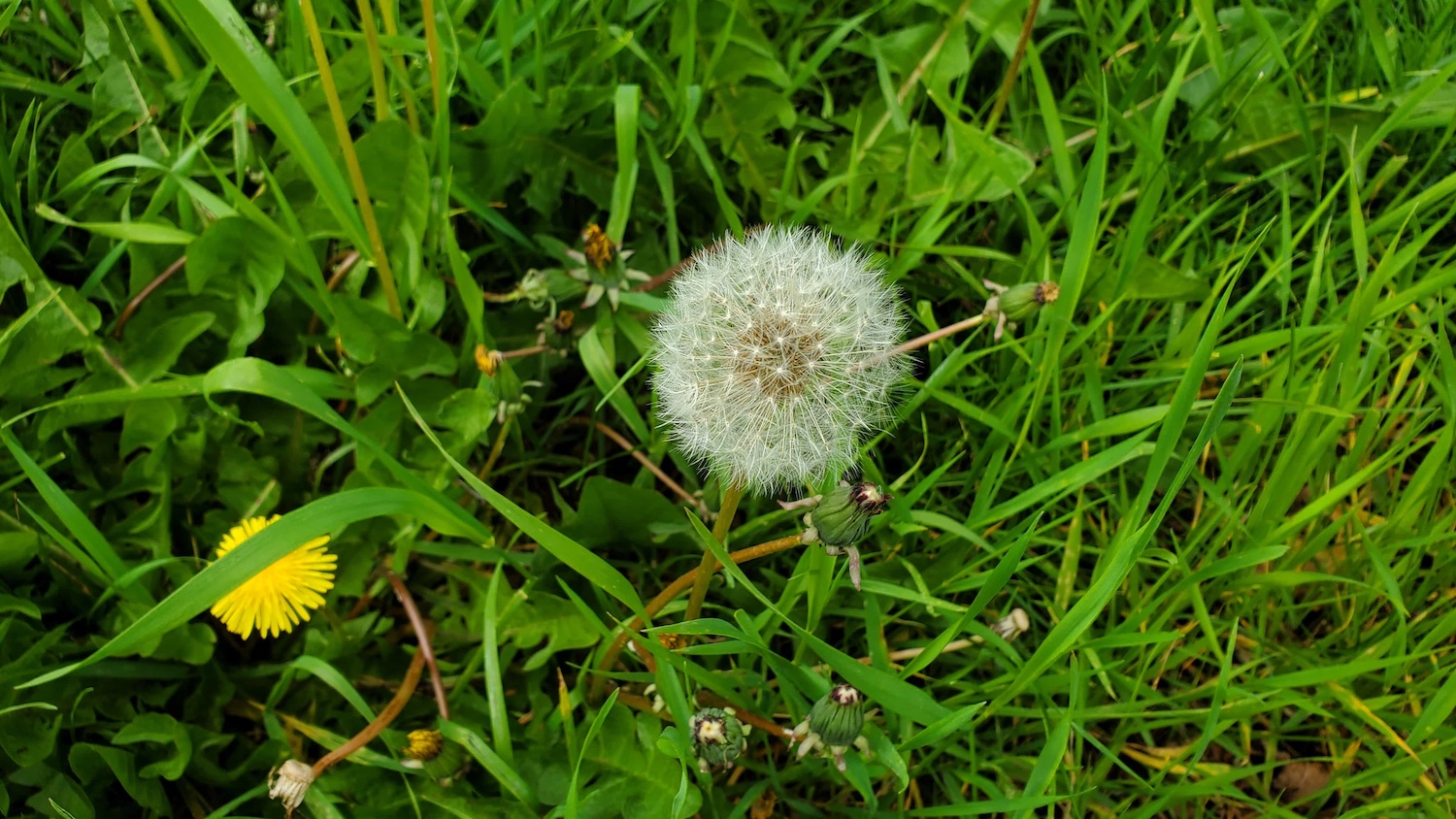
Creeping buttercup (Ranunculus repens) is one of the most stubborn lawn and garden weeds in the Seattle area — and one of the most misidentified. It moves into wet, compacted ground, spreads by runners that root as they go, and can take over a thin lawn in a couple of seasons. It is listed on King County's noxious weed list, which means leaving it alone is not really an option if you want your yard back. Here is how to recognize it with confidence and how to get rid of it for good.
Identification: Is It Creeping Buttercup?
- Flowers — Glossy, bright yellow, five rounded petals, about an inch across, blooming mainly April through August. The shine is distinctive: the petals look almost varnished.
- Leaves — Divided into three lobed leaflets on a long stalk, often with pale blotches. Leaves near the base have longer stalks than those up the stem.
- Growth habit — Low and spreading. Creeping stems (stolons) run along the soil surface and root at the nodes, so one plant becomes a mat of connected plants.
- Where it grows — Wet, poorly drained, compacted soil: soggy lawn areas, ditch edges, low spots, and neglected beds. If buttercup is thriving, it is telling you the ground stays wet and packed.
- Look-alikes — Lesser celandine has more petals (usually 8–12) and heart-shaped leaves; tall buttercup grows upright and does not creep. The runners rooting at the nodes are the creeping buttercup giveaway.
One more reason to deal with it: creeping buttercup is toxic to grazing animals and can irritate skin and mouths. The toxins break down when the plant is dried, but fresh growth in a yard where pets roam is worth removing.
Why It Loves Seattle Lawns
Our winters deliver months of rain on clay-heavy soils, and lawns compact under foot traffic and mower weight. Grass thins out in those wet, packed spots — and buttercup, which tolerates waterlogged roots far better than turf, moves straight in. Mowing does not slow it down; it grows below blade height and spreads sideways under the mower.
Control: A Season-by-Season Plan
Step 1: Fix the ground it loves
Every control method works better once you change the conditions. Aerate compacted areas, topdress with compost, and correct drainage in spots that stay soggy — even basic grading or a French drain in the worst corner. Buttercup in dry, loose, fertile soil is a much weaker competitor.
Step 2: Remove it — roots and runners
- Hand removal — Best for beds and small patches. Work when the soil is moist, loosen with a fork, and trace every runner, lifting the rooted nodes. Miss a node and you have left a new plant.
- Smothering — For badly infested bed areas, cover with cardboard and 4–6 inches of mulch for a full season. The mat dies without light; replant after.
- Do not compost it — Runners and roots can survive home compost piles. Bag buttercup and put it in the trash or municipal yard waste, not your compost.
Step 3: Crowd it out with grass
In lawns, the long game is turf density. After removing buttercup, overseed the bare ground with a Pacific Northwest grass blend, keep it watered through establishment, and mow high (3 inches). Fertilize on a regular schedule — buttercup thrives in hungry, acidic soil, and a soil test often shows low pH and low fertility underneath an infestation. Lime and feed according to the test, and the grass starts winning.
Step 4: Herbicides, if needed
For large lawn infestations, a selective broadleaf herbicide containing MCPA or triclopyr is effective on buttercup while sparing grass — and it matters which product: common 2,4-D blends are notably weaker on buttercup. Apply when it is actively growing (spring and early fall are best), follow the label exactly, and keep it away from garden beds, where it will damage ornamentals. Two applications a season apart are often needed for a heavy mat.
What Success Looks Like
Expect a full season of work, not a weekend. Remove the mat, fix the drainage and compaction, feed and thicken the lawn, and spot-pull the stragglers that pop up from missed nodes. Do that, and buttercup goes from a takeover to an occasional visitor you can pull in passing.
Buttercup is part of the invasive-plant work in our yard cleanup service — we remove it by the runner and help fix the wet, compacted ground it loves.