
Seattle lots are getting closer together, and second-story windows have a way of appearing right where your backyard used to feel private. The good news: the right trees and shrubs can give you a living wall that looks better than any fence — and in our climate, it grows fast. Here is how we help Seattle homeowners choose privacy plantings that actually work.
Start With the Space, Not the Plant
Most privacy-planting mistakes happen at the nursery, where everything looks small. Before you pick a plant, check four things:
- Mature height and width — A Leyland cypress in a 10-foot side yard is a future argument with your neighbor.
- Growth rate — Fast growers screen sooner but need more pruning; slow growers are an investment.
- Light — Count the hours of sun the planting line actually gets in winter, not just summer.
- Roots and utilities — Keep large trees off sewer lines, sidewalks, and foundations, and mind overhead wires.
Best Privacy Trees for Seattle
Emerald Green Arborvitae
The default Seattle privacy tree for a reason: a tidy 10–15 foot column that fits narrow side yards and needs almost no pruning.
Leyland Cypress
When you need a tall screen fast — 3 or more feet of growth a year — nothing beats it. Best on larger lots where its 30+ foot mature size has room.
Western Red Cedar
Our native giant, in cultivated forms that stay more manageable. Feathery, fragrant foliage and superb wildlife value.
Japanese Cedar (Cryptomeria)
Soft, elegant texture and a naturally tidy conical shape. A refined alternative to arborvitae for a formal look.
Columnar Hornbeam
A deciduous option with a tight, upright form for summer privacy along property lines — and it holds its copper leaves well into winter.
Southern Magnolia (Compact Varieties)
Broadleaf evergreen drama: huge white summer flowers and glossy leaves. Compact forms like 'Little Gem' suit smaller Seattle yards.
Best Privacy Shrubs to Pair With Them
Trees handle the second story; shrubs close the gaps at eye level. Our most-planted combinations:
- Skip laurel or Portuguese laurel — Fast, dense, and glossy under taller trees.
- Photinia — Red new growth adds color to an all-green screen.
- Camellia and rhododendron — Flowering layers for part-shade borders.
- Escallonia — Summer flowers and a loose, coastal feel.
- Clumping bamboo — A fast vertical accent that stays where you plant it.
The Layered Screen: How Pros Build Privacy
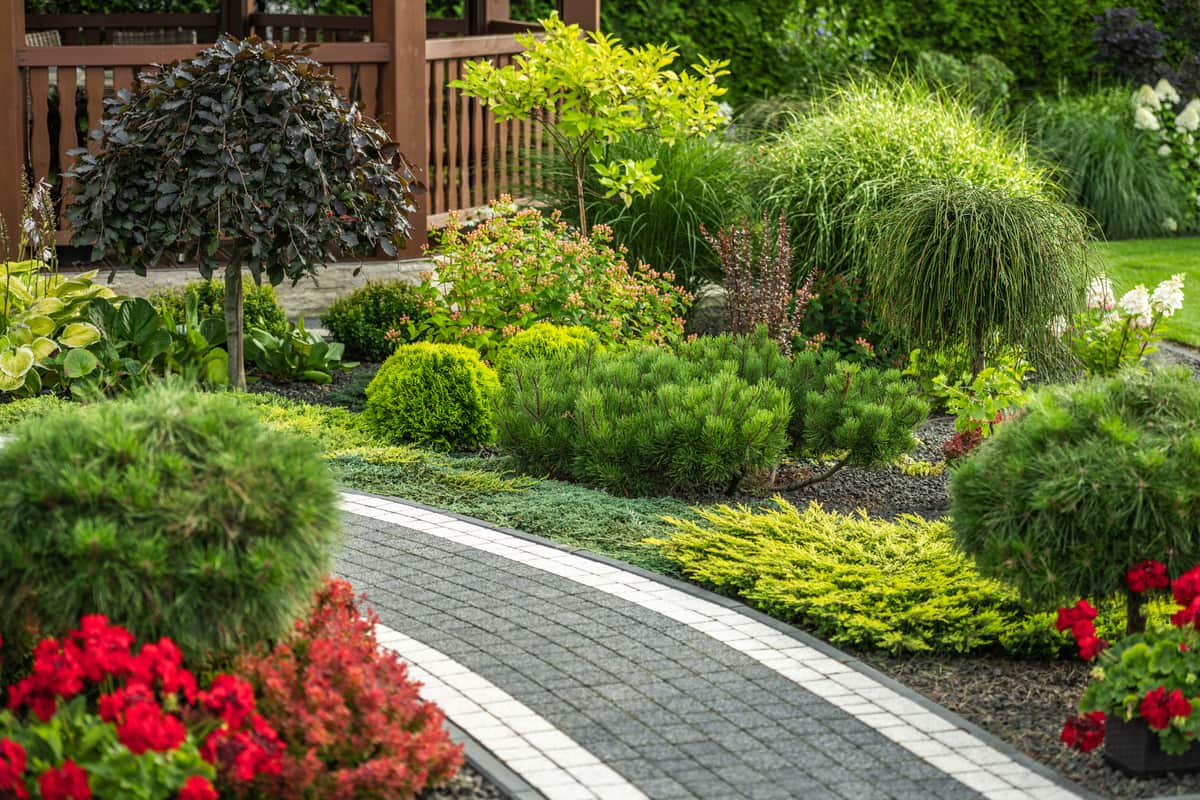
The most natural-looking — and most effective — screens mix heights: a back row of trees for height, a middle row of large shrubs, and a front layer of flowering shrubs and perennials. Layering closes sight lines at every angle, looks like a garden instead of a wall, and means one struggling plant never opens a hole in your privacy.
Common Mistakes to Avoid
- Planting on the property line — Center the plant on its mature half-width, not its nursery pot.
- One species, one row — A single disease or dry summer can take out the entire screen.
- Skipping the first two summers of watering — Seattle summers are dry; new screens need deep watering until roots establish.
- Ignoring the mature size — The number-one reason we get called to remove privacy plantings.
For a deeper look at hedge options, see our guide to the top 6 evergreen hedges for Seattle gardens. And if you would rather hand the whole project off — design, planting, and the first seasons of care — that is exactly the kind of work our crews do every week across Seattle.